Author Brené Brown has some really good things to say about what church should be and, at its best is, about: being with people through pain and loss:
Her point is that the church exists to help people through their lives, not to give people an escape from their lives. Jesus' birth, life, death, and resurrection--what we call his incarnation--is all about triumphing over the world by moving through the world. Worth thinking about.
Friday, August 9, 2013


Monday, July 29, 2013
Something to Take Home

"the first and most important avenue of ministry for any baptized Christian is their daily life and work. What they do and say in their homes, at the work, and in their leisure. In addition to that, God calls each baptized Christian to take his or her place in the life, worship, and governance of the Church."Those of us who work for the church for a living often forget that just as ordained ministers do not work only on Sunday mornings, so too those in the pews do most ministry outside the church walls. Certainly, as is pointed out, God calls us each to take our place in the life, worship, and governance of the church. However, as clergy we can often drift into a sense that if we can't find someone to teach Sunday School this week or to count the offering or to serve on the Vestry (church board) then people aren't really doing ministry. We're not sure what they're doing, but it isn't ministry!
-- from St. John's Church, Grand Haven, MI (emphais mine)
Similarly, those in the pews can see those of us with collars as "professional ministers." Sometimes when I am asked to pray at a Kiwanis Club meeting or other semi-public event, I jokingly say "I'm a professional: Don't try this at home!" Of course, the reason it is a joke is that prayer is something that everyone should try at home--and at work, and anywhere else it occurs to them! Similarly, most ministry both inside and outside of church is not done by clergy but by the laity.
The reality is that, for a Christian, all of life is ministry if lived intentionally so. Whether you are preparing a sermon for Sunday or preparing a meal for a friend or your family, service to others or even service to the Christ who lives in you can be ministry. As Brother Lawrence writes:
“We ought not to be weary of doing little things for the love of God, who regards not the greatness of the work, but the love with which it is performed.”So the lesson for all of us this week is to be as mindful of God in all of the work we do as I suggested members be mindful of distributing invitation cards. Our ministry is also our invitation--our invitation to others to love God and love others as God has loved us. Hope to see you on Sunday!
― Brother Lawrence, The Practice of the Presence of God
Tuesday, July 16, 2013
Faith and Fruitfulness

"You have heard of this hope before in the word of the truth, the gospel that has come to you. Just as it is bearing fruit and growing in the whole world, so it has been bearing fruit among yourselves from the day you heard it and truly comprehended the grace of God." -- Colossians 1:6-7I was thinking about this passage as well as the Parable of the Good Samaritan on Saturday, when it happened.
It was the classic preacher's nightmare--you finish your sermon, put it to bed, prepare to go do bed yourself and suddenly you hear of an event you cannot not include in your sermon--such was the case with me and likely thousands of my colleagues when we heard of the verdict in the case of the killing of Treyvon Martin late Saturday night. Juxtapose that with the fact that the Gospel appointed for last Sunday was the Parable of the Good Samaritan, Jesus' answer to the question "Who is my neighbor?" and you have the need for late night or early morning sermon revision.
I didn't say a lot about the verdict and am still thinking about what would be the most helpful thing to say about it. In my sermon, I did reflect on the fact that St. Edward's is a typical suburban Episcopal church largely composed of relatively well-off white people who "drove here in decent cars, know that we will have lunch after church, have a place to sleep tonight, and are unlikely to be hated or feared in the next 24 hours." I also noted, as Marty Kaplan wrote, that "we have been taught to be helpless and jaded rather than to feel that we are empowered and can make a difference." After having attended a recent conference called the World Domination Summit (WDS) with 2,800+ people whose collective goal is to "live remarkable lives in a conventional world" I was keenly aware that the church is pretty much out of touch.
I can't tell you the number of blog entries I've read, conferences I've attended, books I've dug into, and conversations I've had about "growing the church." Some of them are great, most are encouraging, all of them pretty much focus on how to doing what we're doing better than we're doing it. Some even are designed to encourage discouraged clergy who are taking care of struggling, vulnerable churches.
Few people in these conferences are talking about changing the world, and none has 2,800 people.
What I learned from my experience at WDS was that there are a tremendous number of people, mostly younger than I am but a few older, who look at the world and have a burning desire to be a part of, if not lead, positive change. Few consider the church to have any part in that effort. I detected a few references to Jesus during my time at WDS, a song about Lazarus coming out of the tomb, and some discussion of the Christian community by Donald Miller, author of Blue Like Jazz, but mostly the church was absent from the discussion.
What I talked about in my sermon on Sunday is that few younger people are interested in joining a church of passive privilege--they have better things to do with their time and money than being a part of a group of people who they perceived to be disengaged and insulated from the world's struggles and either unwilling or unable to make any meaningful contribution to the goal of changing the world. If we want to grow the church and draw new people in, we will need to be a church worth being a part of. We will need to be a church of people whose faith bears fruit.
How do we do that? Three ideas spring to mind:
- Be aware of the many blessings we have in our lives and be actively grateful and generous, knowing that we are blessed to be a blessing to others.
- Be proactive in addressing the injustices of the world, not fearfully reactive and hiding behind walls of safety and privilage.
- Be intentional about growing and being fruitful in our faith, knowing that we can always be better disciples of Jesus than we are now.
Friday, May 24, 2013
Breaking the Busyness
“Bidden or not bidden, God is present.”
-- Desiderius Erasmus

As we think about Trinity Sunday--the only feast day of the Christian year named for a doctrine rather than a saint or an event--it is worth considering how God manifests in the world. The Trinity is a way of explaining how God, who can be experienced in three different ways, is nevertheless one. I suspect any number of my colleagues are going to tie themselves up in theological or homiletical knots attempting to "explain the Trinity." In light of the above, my thoughts go a different direction, asking the question: "What if God showed up and no one noticed?"
God is already present in our world. The creation narratives talk about God's Spirit hovering over the waters of creation. The Old Testament repeatedly witnesses to God's redemptive power and love for God's people. As Christians, we believe that the culmination of God's presence with us was in the person of Jesus of Nazareth who lived, died, and rose again. We believe that God empowered the church with the Holy Spirit to witness to God's ongoing presence, power, and love for the world.
And yet we are often too busy, to preoccupied, to notice that God hasn't left the building.
At its best, Trinity Sunday is not simply a Sunday for preachers to demonstrate how well they can explain the unexplainable. It is an opportunity for us to acknowledge the fact that we cannot fully describe God, point to God, and certainly cannot explain God. And yet we believe God is there. Now we just need to pay attention to that fact and open ourselves to the unexplainable.
Friday, January 4, 2013
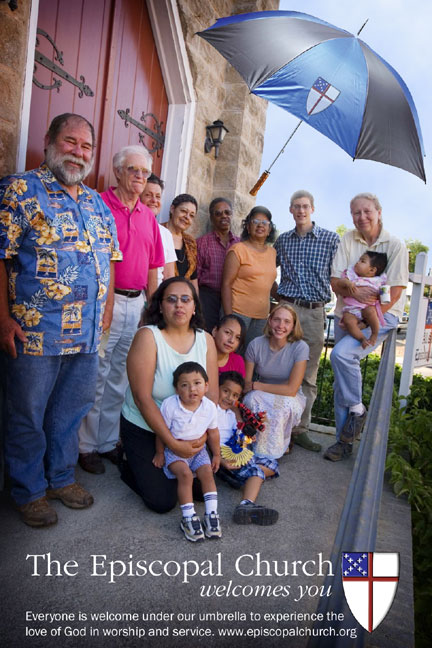
5 Things You Don't have to Leave Behind When You Join The Episcopal Church
1. Love of the Bible.
There's an old joke that there is a lot of the Book of Common Prayer (our primary worship resource) in the Bible, which is just a backwards way of saying that our worship incorporates a LOT of Biblical texts and stories in it. We may not say "turn in your Bibles to...." very often (if at all) during worship, but we read a passage from the Old Testament, a Psalm, a passage from the New Testament, and one from one of the four Gospels each and every Sunday---and we do so according to a set three-year schedule, or lectionary, not according to a multi-week theme or the pastor's whim. This means that we cover quite a lot of the Bible over those three years, not to mention having Biblical texts woven throughout our prayers and creeds. Want to hear more of the Bible read? Come to the Episcopal Church!
2. Questioning Authority or NOT Questioning Authority
Some people come into the Episcopal Church attempting to escape from rules and regulations. A recent survey of Roman Catholics found that 88% of them believed that it was up to each individual to make up his or her mind about whether to follow official church teachings. I suspect the percentage would be higher in the Episcopal Church, assuming that the average person-in-the-pew actually knew what the official teaching of the church on any given issue was! So, you can come to the Episcopal Church and feel free to make your own choices, wrestle with your own ethical dilemmas (hopefully with help!), and even say "I don't know" if you really, really don't know. I say it all the time.
On the flip side, there is a persistent criticism of the Episcopal Church that "Episcopalians don't believe anything" or "It doesn't matter what you believe" or even (with a nod to Robin Williams) "No matter what you believe, there's bound to be at least one other Episcopalian who agrees with you." There is some truth to the fact that we have a pretty "big tent" that tries to incorporate a wide range of beliefs and we don't have any sort of "belief statement" or other doctrinal statement. However, we DO recite the Nicene and Apostles Creeds and have a Baptismal Covenant which is foundational to who we are. We also have canons (church laws) which define what we can and cannot do. So, if you are looking for a structured church with a fair amount of wiggle room, you are welcome here.
3. An emotional attachment to God in Christ.
One thing I've noticed about many folks in the Episcopal Church is that we focus a lot on knowledge, on our head. Maybe it has to do with our English heritage, but the impetus to do things "decently and in order," to have a "stiff upper lip", or otherwise not to get too emotionally involved either with our faith or the world has given us a nickname as "God's frozen chosen" (though we apparently share that with the Presbyterians). We're not like the Pentecostals or other more flamboyant faith traditions, but neither are we simply Jesus Christ Community College or the Episcopal Social Club. Many, if not most, of us have actually had a real experience of encountering Jesus in our everyday lives. As writes:
Thursday, December 20, 2012
The Church: Hospital, School, Fitness Club, or Inn?
In a recent dedication of a new building at St. Martin's Episcopal Church in Houston, Texas (the largest Episcopal church in the United States), former Archbishop of Canterbury George Carey said:
This is a frequent lament by pastors and priests: we have larger numbers of people in our pews on Christmas, Easter, and after traumatic national events but those people don't seem to be interested in sticking around and becoming a part of the faith community. Those of us who are part of this faith community are often puzzled about this. However, reflecting on what church means for people, such a phenominon, while perplexing to those who have made the church their spiritual home, makes sense based upon a person's view of what church is. Four views come to my mind.
Abigail Van Buren (Dear Abby) has been famously quoted as saying that "a church is a hospital for sinners, not a museum for saints." Over and over again, I've heard this sentiment expressed--especially in evangelical circles. Pastors see the ravages of sin and death all around us and say "come to the church to be cured!" This model of the church certainly has its good points. Ever since Jesus' time, Christians have been heavily involved with healing. The founding of many hospitals has been at the behest of churches. Some people naturally gravitate towards churches when they are in need of healing. That's why we have a healing service as part of our worship every third Sunday (next one is January 20). The difficulty with this view of the church is twofold. First, there are plenty of people in the world who don't see themselves as having a "sin sick soul", to quote a famous hymn. If you don't feel like you are sick, why visit a doctor or a hospital? No one visits a hospital unless one is sick, visiting someone
who is sick, or occasionally getting some preventative care to keep from
becoming sick. Second, even if one does visit a hospital, no one stays there longer than absolutely necessary. So when people show up at our churches with acute needs and find some comfort and healing there, we shouldn't be surprised that they don't stay. After all, now that they're feeling better, why keep visiting the hospital/church?
There is also the popular notion of the church as school. Again, churches have been some of the primary founders and supporters of schools--we've seen it as part of our vocation to care for children and to help them be formed and educated. In the church, we used to think of this only in terms of imparting information: telling Bible stories, recounting church history, teaching about the sacraments, etc... We've evolved into realizing that being a follower of Christ requires not just education, but formation. Recently, the National Association for Episcopal Christian Education Directors (NAECED) changed its name to Forma, reflecting not only an easier name to remember but also a shift from the notion of education (imparting information) to formation (shaping the whole person). Even so, the difficulty with this idea of the church as a school is also twofold. First, there are people who are not looking to be educated. Just as they don't feel sick enough to go to a church-as-hospital, they don't feel uneducated enough to to a church-as-school. In fact, they may even have been hurt by the church or a church-related school in some way and a loathe to repeat the experience. Second, one traditionally graduates from school, but ideally no one "graduates" from church! We've seen some of this notion play out with the rite of Confirmation (adult affirmation of faith). Many times, it has been seen as a graduation from church for teenagers--their parents made them go to church when they were children, but now that they've been confirmed they don't need to go anymore. When we talk about this area of our life together as lifelong Christian formation rather than matriculation through a set of requirements it makes it clear that we're not just imparting information.
 With the evolution of being equipped to follow Christ moving from education to formation, many people man now look upon church as a fitness club--getting in shape for Jesus. The difficulty with this idea is obvious--how many people are truly excited about getting regular exercise? Even more telling, how many are excited about getting regular spiritual exercise? Frankly, this is what trips most people up--we all can become spiritually lazy (and pastors are not exempt). We can often exist on a sort of spiritual inertia until some crisis intrudes for which we are spiritually ill-equipped, then it is a trip to the church-as-hospital. Also, like physical exercise, we don't really think of ourselves as having the time to spiritually exercise--we're too busy doing other things. So when we talk about getting "fit for life" or other fitness metaphor, people have to overcome inertia, busyness, and lack of motivation to show up on Sunday mornings--and we don't often make explicit what we're doing. What would you do if you simply showed up to your local fitness club and there were people working out on strange machines, and talking with each other (some in great shape, some "in progress") and no one gave you any sort of orientation? Or what if you showed up to a fitness club and the room was empty of equipment? You would likely head back out the door. That is what I suspect church often looks like to the unchurched--a lot of strange looking hardware (what is a chalice? a paten? candles? prayer books? hymnals? organ music?) and odd routines without any sort of guidance about how to use them or what they are for. We need to be more explicit about how we are forming and spiritually exercising people.
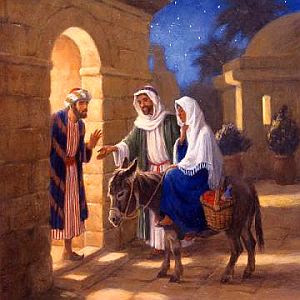 Finally, appropriate for the season, some people see the church as an inn, or hotel. On the bad side of this, the church can degenerate into being seen as a social club--an exclusive place where the "beautiful people" congregate to reinforce how nice things are. That was the genesis of the Dear Abby quote about the church not being a "museum for saints." We don't want to be seen as, or actually be, a place where one must be perfect to attend. I've seen people apologize for crying in church! Why apologize? Because it is seen as not "seemly." Well, church should be the one place in which we can express our deepest emotions, so cry away! People also can see the church as a place for rich people--much like going to a hotel with a fancy lobby. The question "Do I fit in here?" is often at the top of people's minds when the visit a church. I actually think that an inn is a wonderful metaphor for the church. We need to constantly look at how hospitable we are: Are we easily seen from the road? Is our signage good and clear? Can people find their way to our front door easily? Are they welcomed warmly when they do? Does the place feel like an exclusive club or a warmly welcoming bed and breakfast? We might even be seen as having a (spiritual) exercise room, a buffet (coffee hour?), a spa for healing (holy oil at the healing service?), even a classroom or two.
 I'm going to continue to reflect on the inn metaphor for church in the coming weeks. I think it is a rich one. We often talk about the church as "my church" as if we somehow own it. This does make us feel more at home (after all, how much more at home can you feel then when you are at home?) but may make others feel like they are temporary and unexpected guests rather than potential members of God's family. I much prefer the image of the church building that I learned as a child: God's house. We are all in God's house. We are all staff (paid or unpaid) and we are welcoming guests who intentionally seek us out as a place to rest that is apart from the hustle and bustle of the world. We also need to be mindful that God is both our host and our permanent guest--we need to make sure we have room in each of our "inns" for God as the Christ child. We also need to be aware of whether we're "living the Gospel in a relevant way" as a church--making sure that we are adapting well to changing needs and providing things for which people seek out the church. I'm not suggesting that we become some sort of plastic "dream church" for everyone, but that we make sure that we are engaged in actively living the gospel in the world rather than merely supporting one another.
As we end Advent and approach the Christmas season, may we have room in our hearts for Christ, our homes for one another, and our church for those who seek a place of rest and refreshment--and perhaps an appointment with the One who is Emmanuel, God with us.
“Those [churches] that are growing are living the gospel in a relevant way with energetic leaders who adapt, good lay leadership and dynamic preaching...”Reading that this morning caused some thoughts to coalesce that have been drifting around for a while. As a response to the Newtown, Connecticut shootings, commentator (and ordained minister) Mike Huckabee famously talked about the tragedy as not surprising considering that "we've systematically removed God from our schools." He goes on to lament the fact that Americans often pretty much ignore God until a crisis hits, then go running to church in search of comfort only to vanish weeks or months later after the ripples from the latest tragedy have died down. The fallacy in his argument, beyond its pastoral shortcomings, lies in equating the church with God. But that theological discourse will have to wait for another post.
This is a frequent lament by pastors and priests: we have larger numbers of people in our pews on Christmas, Easter, and after traumatic national events but those people don't seem to be interested in sticking around and becoming a part of the faith community. Those of us who are part of this faith community are often puzzled about this. However, reflecting on what church means for people, such a phenominon, while perplexing to those who have made the church their spiritual home, makes sense based upon a person's view of what church is. Four views come to my mind.
 |
| St. Luke's Hospital, San Francisco |
 |
| Photo from the Forma web site--Godly play. |
As we end Advent and approach the Christmas season, may we have room in our hearts for Christ, our homes for one another, and our church for those who seek a place of rest and refreshment--and perhaps an appointment with the One who is Emmanuel, God with us.
Tuesday, October 9, 2012
Remembering that we are Blessed
 |
| The logo for the "Blessed to be a Blessing" stewardship campaign. |
In the Eucharist, we recount what we term Jesus' "words of institution"--"Do this in remembrance of me." In the Episcopal Church, we believe that this holy meal is not simply a nostalgic nod to an event that took place thousands of years ago, but rather a way of making that even present, alive, and real to us today. We refer to that process as anamnesis, the process of entering into the life, death, and resurrection of Jesus through partaking of the bread and wine in which we believe Jesus is present. We believe that as we physically participate in this holy meal, we spiritually participate in Jesus' life, death, and resurrection.
More than that, however, our gathering each Sunday for prayer, praise, and this participation serves to remind us of what the world wants us to forget: We are blessed. Most companies start with an idea someone has for a product and flourish by a marketing campaign that says that we need that product to be whole, to be fulfilled, to be happy. The word blessed in the Sermon on the Mount is often translated or paraphrased as happy. When we forget that we are blessed, we become unhappy and we look for things that will make us happier, at least for a while. This has nothing to do with depression or lack of it--that is an entirely different story. Rather, this has to do with the average run-of-the-mill unhappiness that is fostered and nurtured by the our consumer culture. In twenty-first century America, we've translated the "pursuit of happiness" enshrined in our Declaration of Independence into the pursuit of stuff.
At its heart, stewardship is more than the "October beg-a-thon" to which the late Rev. Terry Parsons referred. Rather, it is an opportunity to be reminded that, as Jesus says, "life does not consist in an abundance of possessions." (Luke 12:15b) To be reminded that we are blessed is to be reminded, even in the midst of trials and tribulations, that we are children of God who are blessed in order that we might bless others. I've heard many times that a good remedy for being down or depressed is to do something for someone else. Service to others is not just some sort of altruistic impulse, but something that reminds us that we have the power to positively influence another person's life. We are blessed to be a blessing to others.
Subscribe to:
Posts (Atom)