Friday, January 4, 2013

5 Things You Don't have to Leave Behind When You Join The Episcopal Church

Several weeks ago Rachel Held Evans' had a blog post "5 Things You Don't Have to Leave Behind When You Leave Fundamentalism" and that has inspired me (Fr. Tom) to opine on five things one doesn't have to leave behind when one joins The Episcopal Church:

1. Love of the Bible.

There's an old joke that there is a lot of the Book of Common Prayer (our primary worship resource) in the Bible, which is just a backwards way of saying that our worship incorporates a LOT of Biblical texts and stories in it. We may not say "turn in your Bibles to...." very often (if at all) during worship, but we read a passage from the Old Testament, a Psalm, a passage from the New Testament, and one from one of the four Gospels each and every Sunday---and we do so according to a set three-year schedule, or lectionary, not according to a multi-week theme or the pastor's whim. This means that we cover quite a lot of the Bible over those three years, not to mention having Biblical texts woven throughout our prayers and creeds. Want to hear more of the Bible read? Come to the Episcopal Church!

2. Questioning Authority or NOT Questioning Authority

Some people come into the Episcopal Church attempting to escape from rules and regulations. A recent survey of Roman Catholics found that 88% of them believed that it was up to each individual to make up his or her mind about whether to follow official church teachings. I suspect the percentage would be higher in the Episcopal Church, assuming that the average person-in-the-pew actually knew what the official teaching of the church on any given issue was! So, you can come to the Episcopal Church and feel free to make your own choices, wrestle with your own ethical dilemmas (hopefully with help!), and even say "I don't know" if you really, really don't know. I say it all the time.

On the flip side, there is a persistent criticism of the Episcopal Church that "Episcopalians don't believe anything" or "It doesn't matter what you believe" or even (with a nod to Robin Williams) "No matter what you believe, there's bound to be at least one other Episcopalian who agrees with you." There is some truth to the fact that we have a pretty "big tent" that tries to incorporate a wide range of beliefs and we don't have any sort of "belief statement" or other doctrinal statement. However, we DO recite the Nicene and Apostles Creeds and have a Baptismal Covenant which is foundational to who we are. We also have canons (church laws) which define what we can and cannot do. So, if you are looking for a structured church with a fair amount of wiggle room, you are welcome here.

3. An emotional attachment to God in Christ.

One thing I've noticed about many folks in the Episcopal Church is that we focus a lot on knowledge, on our head. Maybe it has to do with our English heritage, but the impetus to do things "decently and in order," to have a "stiff upper lip", or otherwise not to get too emotionally involved either with our faith or the world has given us a nickname as "God's frozen chosen" (though we apparently share that with the Presbyterians). We're not like the Pentecostals or other more flamboyant faith traditions, but neither are we simply Jesus Christ Community College or the Episcopal Social Club. Many, if not most, of us have actually had a real experience of encountering Jesus in our everyday lives. As author Frederick Buechner writes:
God cannot be expressed but only experienced. In the last analysis, you cannot pontificate but can only point. A Christian is one who points at Christ and says, "I can't prove a thing, but there's something about his eyes and his voice. There's something about the way he carries his head, his hands. The way he carries his cross. The way he carries me."*
Worship and service in and through the Episcopal Church is supposed to enhance that relationship, not retard it.

4. The life you currently live (unless you want to).

One of the biggest myths about church membership is that there is some sort of qualification exam, a sort of pretest that qualifies you for church membership. No, it isn't seen as a written test, just a sort of feeling like one needs to be "good enough" or "smart enough" or "cleaned up enough" to darken the door of a church on Sunday morning and not feel completely awkward and out of place. To be sure, many of us get "cleaned up" on Sunday morning (there is a reason one used to call one's best outfit one's "Sunday best," after all) but ideally that should stem from wanting to give one's best to God, not as a sort of a show for others.

That being said, there is also the myth about the Episcopal Church that we pretty much take anyone and don't really care about what you believe, how you act, or what sort of values you hold. While, as a denomination, we are fairly liberal, that doesn't mean that we don't care about what you believe, how you act, or what your values are. We do believe in the transformational power of a relationship with Jesus Christ and that as disciples, or followers, of Jesus we need to emulate what Jesus believed (as expressed through what he said and did), how Jesus acted, and what sort of valued Jesus held. That also precludes settling for less than God has called us to be. In summary, we welcome everyone as they are but encourage them to be all that God has called them to be!

5. A passion for serving others--with no strings attached.

From its beginnings, the church has been all about serving others, especially the poor. In fact, one of the first conversations after Jesus' death and resurrection had to do with the need for people to take charge of this service and allow the twelve disciples to focus on preaching, teaching, and evangelism. This resulted in the founding of the ordained ministry of Deacon. A common misconception is that the church does such social service only as a tool for evangelism--a "hook" to bring in potential converts. Understandably, few people otherwise committed to serving others are very excited about service with strings attached. Fortunately, that isn't what service in the Episcopal Church is about. Outreach (serving others) and Evangelism (telling others about Jesus) are related, but are not the same thing. There are many people who benefit from programs of the Episcopal Church that never actually come into the church building itself--they simply are served by people who do. One person has even dubbed us "Episco-ninjas"!


So come as you are, bring your Bible and your doubts with you. question authority, and love God and others. We get together every Sunday.


*Buechner, Frederick, Wishful Thinking: A Seeker's ABC

Thursday, December 20, 2012

The Church: Hospital, School, Fitness Club, or Inn?

In a recent dedication of a new building at St. Martin's Episcopal Church in Houston, Texas (the largest Episcopal church in the United States), former Archbishop of Canterbury George Carey said:
“Those [churches] that are growing are living the gospel in a relevant way with energetic leaders who adapt, good lay leadership and dynamic preaching...” 
Reading that this morning caused some thoughts to coalesce that have been drifting around for a while. As a response to the Newtown, Connecticut shootings, commentator (and ordained minister) Mike Huckabee famously talked about the tragedy as not surprising considering that "we've systematically removed God from our schools." He goes on to lament the fact that Americans often pretty much ignore God until a crisis hits, then go running to church in search of comfort only to vanish weeks or months later after the ripples from the latest tragedy have died down. The fallacy in his argument, beyond its pastoral shortcomings, lies in equating the church with God. But that theological discourse will have to wait for another post.

This is a frequent lament by pastors and priests: we have larger numbers of people in our pews on Christmas, Easter, and after traumatic national events but those people don't seem to be interested in sticking around and becoming a part of the faith community. Those of us who are part of this faith community are often puzzled about this. However, reflecting on what church means for people, such a phenominon, while perplexing to those who have made the church their spiritual home, makes sense based upon a person's view of what church is. Four views come to my mind.

St. Luke's Hospital, San Francisco
Abigail Van Buren (Dear Abby) has been famously quoted as saying that "a church is a hospital for sinners, not a museum for saints." Over and over again, I've heard this sentiment expressed--especially in evangelical circles. Pastors see the ravages of sin and death all around us and say "come to the church to be cured!" This model of the church certainly has its good points. Ever since Jesus' time, Christians have been heavily involved with healing. The founding of many hospitals has been at the behest of churches. Some people naturally gravitate towards churches when they are in need of healing. That's why we have a healing service as part of our worship every third Sunday (next one is January 20). The difficulty with this view of the church is twofold. First, there are plenty of people in the world who don't see themselves as having a "sin sick soul", to quote a famous hymn. If you don't feel like you are sick, why visit a doctor or a hospital? No one visits a hospital unless one is sick, visiting someone who is sick, or occasionally getting some preventative care to keep from becoming sick. Second, even if one does visit a hospital, no one stays there longer than absolutely necessary. So when people show up at our churches with acute needs and find some comfort and healing there, we shouldn't be surprised that they don't stay. After all, now that they're feeling better, why keep visiting the hospital/church?

Photo from the Forma web site--Godly play.
There is also the popular notion of the church as school. Again, churches have been some of the primary founders and supporters of schools--we've seen it as part of our vocation to care for children and to help them be formed and educated. In the church, we used to think of this only in terms of imparting information: telling Bible stories, recounting church history, teaching about the sacraments, etc... We've evolved into realizing that being a follower of Christ requires not just education, but formation. Recently, the National Association for Episcopal Christian Education Directors (NAECED) changed its name to Forma, reflecting not only an easier name to remember but also a shift from the notion of education (imparting information) to formation (shaping the whole person). Even so, the difficulty with this idea of the church as a school is also twofold. First, there are people who are not looking to be educated. Just as they don't feel sick enough to go to a church-as-hospital, they don't feel uneducated enough to to a church-as-school. In fact, they may even have been hurt by the church or a church-related school in some way and a loathe to repeat the experience. Second, one traditionally graduates from school, but ideally no one "graduates" from church! We've seen some of this notion play out with the rite of Confirmation (adult affirmation of faith). Many times, it has been seen as a graduation from church for teenagers--their parents made them go to church when they were children, but now that they've been confirmed they don't need to go anymore. When we talk about this area of our life together as lifelong Christian formation rather than matriculation through a set of requirements it makes it clear that we're not just imparting information.
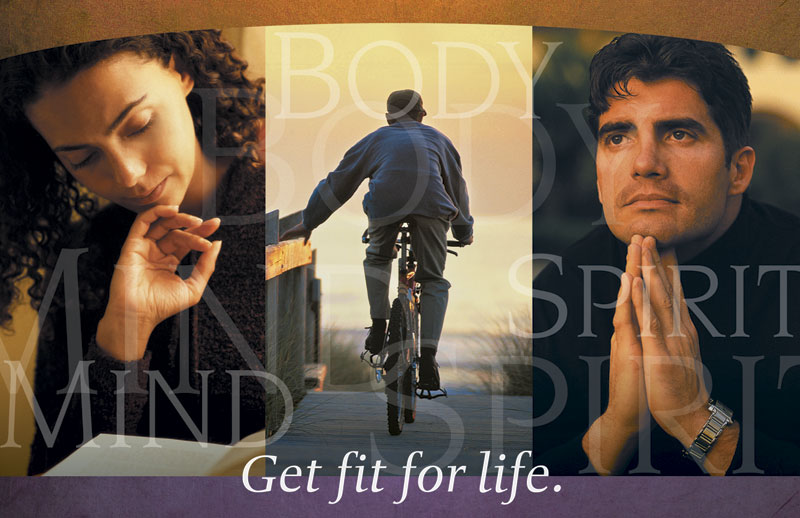
With the evolution of being equipped to follow Christ moving from education to formation, many people man now look upon church as a fitness club--getting in shape for Jesus. The difficulty with this idea is obvious--how many people are truly excited about getting regular exercise? Even more telling, how many are excited about getting regular spiritual exercise? Frankly, this is what trips most people up--we all can become spiritually lazy (and pastors are not exempt). We can often exist on a sort of spiritual inertia until some crisis intrudes for which we are spiritually ill-equipped, then it is a trip to the church-as-hospital. Also, like physical exercise, we don't really think of ourselves as having the time to spiritually exercise--we're too busy doing other things. So when we talk about getting "fit for life" or other fitness metaphor, people have to overcome inertia, busyness, and lack of motivation to show up on Sunday mornings--and we don't often make explicit what we're doing. What would you do if you simply showed up to your local fitness club and there were people working out on strange machines, and talking with each other (some in great shape, some "in progress") and no one gave you any sort of orientation? Or what if you showed up to a fitness club and the room was empty of equipment? You would likely head back out the door. That is what I suspect church often looks like to the unchurched--a lot of strange looking hardware (what is a chalice? a paten? candles? prayer books? hymnals? organ music?) and odd routines without any sort of guidance about how to use them or what they are for. We need to be more explicit about how we are forming and spiritually exercising people.

Finally, appropriate for the season, some people see the church as an inn, or hotel. On the bad side of this, the church can degenerate into being seen as a social club--an exclusive place where the "beautiful people" congregate to reinforce how nice things are. That was the genesis of the Dear Abby quote about the church not being a "museum for saints." We don't want to be seen as, or actually be, a place where one must be perfect to attend. I've seen people apologize for crying in church! Why apologize? Because it is seen as not "seemly." Well, church should be the one place in which we can express our deepest emotions, so cry away! People also can see the church as a place for rich people--much like going to a hotel with a fancy lobby. The question "Do I fit in here?" is often at the top of people's minds when the visit a church. I actually think that an inn is a wonderful metaphor for the church. We need to constantly look at how hospitable we are: Are we easily seen from the road? Is our signage good and clear? Can people find their way to our front door easily? Are they welcomed warmly when they do? Does the place feel like an exclusive club or a warmly welcoming bed and breakfast? We might even be seen as having a (spiritual) exercise room, a buffet (coffee hour?), a spa for healing (holy oil at the healing service?), even a classroom or two.

I'm going to continue to reflect on the inn metaphor for church in the coming weeks. I think it is a rich one. We often talk about the church as "my church" as if we somehow own it. This does make us feel more at home (after all, how much more at home can you feel then when you are at home?) but may make others feel like they are temporary and unexpected guests rather than potential members of God's family. I much prefer the image of the church building that I learned as a child: God's house. We are all in God's house. We are all staff (paid or unpaid) and we are welcoming guests who intentionally seek us out as a place to rest that is apart from the hustle and bustle of the world. We also need to be mindful that God is both our host and our permanent guest--we need to make sure we have room in each of our "inns" for God as the Christ child. We also need to be aware of whether we're "living the Gospel in a relevant way" as a church--making sure that we are adapting well to changing needs and providing things for which people seek out the church. I'm not suggesting that we become some sort of plastic "dream church" for everyone, but that we make sure that we are engaged in actively living the gospel in the world rather than merely supporting one another.

As we end Advent and approach the Christmas season, may we have room in our hearts for Christ, our homes for one another, and our church for those who seek a place of rest and refreshment--and perhaps an appointment with the One who is Emmanuel, God with us.

Tuesday, October 9, 2012

Remembering that we are Blessed

The logo for the "Blessed to be a Blessing"
stewardship campaign.
In the Ash Wednesday liturgy, ashes are placed on each person's forehead with the words "Remember that you are dust, and to dust you shall return." That sobering reminder is meant to bring us up short, to remind us that pretty much everything in our life, even those things most precious to us, is transitory. As I reflect on both the last nearly three years of my tenure here as Priest-in-Charge and the theme of "Blessed to be a Blessing" as the theme of our Fall Pledge Campaign, I am tempted to break out the oil of chrism we use at baptisms, invite everyone forward, and mark a cross on each person's forehead with the words "Remember that you are blessed, and to be a blessing to others."

In the Eucharist, we recount what we term Jesus' "words of institution"--"Do this in remembrance of me." In the Episcopal Church, we believe that this holy meal is not simply a nostalgic nod to an event that took place thousands of years ago, but rather a way of making that even present, alive, and real to us today. We refer to that process as anamnesis, the process of entering into the life, death, and resurrection of Jesus through partaking of the bread and wine in which we believe Jesus is present. We believe that as we physically participate in this holy meal, we spiritually participate in Jesus' life, death, and resurrection.

More than that, however, our gathering each Sunday for prayer, praise, and this participation serves to remind us of what the world wants us to forget: We are blessed. Most companies start with an idea someone has for a product and flourish by a marketing campaign that says that we need that product to be whole, to be fulfilled, to be happy. The word blessed in the Sermon on the Mount is often translated or paraphrased as happy. When we forget that we are blessed, we become unhappy and we look for things that will make us happier, at least for a while. This has nothing to do with depression or lack of it--that is an entirely different story. Rather, this has to do with the average run-of-the-mill unhappiness that is fostered and nurtured by the our consumer culture. In twenty-first century America, we've translated the "pursuit of happiness" enshrined in our Declaration of Independence into the pursuit of stuff.

At its heart, stewardship is more than the "October beg-a-thon" to which the late Rev. Terry Parsons referred. Rather, it is an opportunity to be reminded that, as Jesus says, "life does not consist in an abundance of possessions." (Luke 12:15b) To be reminded that we are blessed is to be reminded, even in the midst of trials and tribulations, that we are children of God who are blessed in order that we might bless others. I've heard many times that a good remedy for being down or depressed is to do something for someone else. Service to others is not just some sort of altruistic impulse, but something that reminds us that we have the power to positively influence another person's life. We are blessed to be a blessing to others.

Thursday, July 26, 2012

What welcoming really means

One of the other parts of our fourfold mission is that we "Welcome all." What, in practice, does that mean? This just came across my Facebook page and I thought I'd share it. I do think that it applies to our church as well (except the part about the Pastor not being able to carry a tune in a bucket, of course....) and, to the extent that it does not, we have work to do:

From Our Lady of Lourdes Catholic Community (via this blog):
We extend a special welcome to those who are single, married, divorced, gay, filthy rich, dirt poor, yo no habla Ingles. We extend a special welcome to those who are crying new-borns, skinny as a rail or could afford to lose a few pounds.
We welcome you if you can sing like Andrea Bocelli or like our pastor who can’t carry a note in a bucket. You’re welcome here if you’re “just browsing,” just woke up or just got out of jail. We don’t care if you’re more Catholic than the Pope, or haven’t been in church since little Joey’s Baptism.
We extend a special welcome to those who are over 60 but not grown up yet, and to teenagers who are growing up too fast. We welcome soccer moms, NASCAR dads, starving artists, tree-huggers, latte-sippers, vegetarians, junk-food eaters. We welcome those who are in recovery or still addicted. We welcome you if you’re having problems or you’re down in the dumps or if you don’t like “organized religion,” we’ve been there too.
If you blew all your offering money at the dog track, you’re welcome here. We offer a special welcome to those who think the earth is flat, work too hard, don’t work, can’t spell, or because grandma is in town and wanted to go to church.
We welcome those who are inked, pierced or both. We offer a special welcome to those who could use a prayer right now, had religion shoved down your throat as a kid or got lost in traffic and wound up here by mistake. We welcome tourists, seekers and doubters, bleeding hearts … and you!
If you aren't covered by any of the above, then you are welcome, too...especially at St. Ed's! 9 a.m. every Sunday.

Wednesday, May 23, 2012

Vital Worship

As we settle into worship confidently (see the previous post), we also need to be aware that our worship needs to meet not only our own needs, but those of others. One way we've talked about doing that has been by starting a second service. However, a recent article gives some good advice about that:
Previous church, now Hallstead Hall.

When congregations are considering a second service, my initial advice is to first address the quality of the service currently offered. There is nothing wrong in and of itself with traditional worship. In fact, done well, traditional worship services rehearse the drama of salvation and can appeal to people of all ages and effectively help them connect with God. The problem is often that the traditional service is done in a way that is so tired and worn that it has lost its capacity to engage most people, especially younger people.

I liken a lethargic worship service to a faded photograph. My wife and I have a picture taken on a picnic with friends during seminary days. It is a Polaroid snapshot and so much of the color has washed out of it over these ensuing more than 40 years and there are some creases from too much handling. Nevertheless, when I look at that picture, I am right back there at Shades State Park with Mindy, and Joe and Ellen, eating lunch and playing cards at a picnic table bathed in sunlight filtered through tall beech trees on that beautiful summer day. The vivid memory of that time together and our deep friendship is triggered once again, even by that faded photograph.

Current church.
Those over 60 or so, remember when traditional worship was new to them and done so well. In those days, the preacher preached as though something was at stake, those who led prayers seemed to pray to a living God, those who read scripture had obviously practiced the reading before stepping into the lectern, and the people seemed to sing the hymns with energy and enthusiasm. Today, too much traditional worship features tired preaching, prayers that are read like a grocery list, and stumbling readers who draw attention to themselves rather than to the Word.

Like that faded photograph, just going through the motions of traditional worship is enough to draw many older adults into an effective worship experience because they still remember when their faith was new and the service was done so well. But young people who endure such services cannot find the Holy Spirit in these services with a flashlight! Neither can those older adults who did not grow up with traditional worship and thus have no memory to draw upon. No wonder such folks often opt out of traditional worship.
I think one of the chief challenges we face at St. Edward's, especially with the average age of our congregation, is the temptation to be satisfied with the "faded photograph" type of worship--a kind of worship that relies more on the spirit of nostalgia than on the Holy Spirit. Like an aging, but familiar house, we are tempted to simply let things go--sometimes not even noticing them. I remember when moving our of our last house and preparing it for sale or for rental, there were many things which we had simply grown to live with and that didn't seem important enough to address while we were living there. Once we had to prepare it for others, however, those things needed to be fixed.

As we continue the process of re-planting St. Edward's, we will find that there are some things that we have "lived with" or even enjoyed in the past that will need to be renewed, changed, or even discarded in favor of something more attractive, more vibrant, and more welcoming. May we undertake that process sensitively but proactively in the coming months and years.

Monday, May 7, 2012

Confident Worship

Therefore let us draw near with confidence to the throne of grace, so that we may receive mercy and find grace to help in time of need. - Hebrews 4:16, NASB
The second part of our fourfold mission is to "worship fully." Any number of people have asked what that means. On our web site, we say that it means that "built upon the liturgical traditions of our church, we will use whatever forms of worship best connect us to God in Christ." Among many things, it means that we will constantly experiment with our worship to strike a balance between the comfort of those already here and the attraction and accessibility of our worship to newcomers. However, before experimentation, there is a foundational principal of "full" worship that I hope to articulate with this post.

As I was engaging in worship with everyone here at St. Edward's a couple of Sundays ago, something that has been percolating in my mind finally crystallized. I've been thinking about worship, specifically worship at St. Edward's, and I've been feeling like there needs to be a change in how we worship. Not merely a change in prayers, music, or other outward signs, but a change of attitude. When I first thought of that, I was thinking that worship really should be easy and effortless. However, neither of those two adjectives really worked for me. Worship is not a natural thing for human beings--we're much more prone to focus on ourselves than we are to focus on God. So, it really couldn't, and shouldn't, be easy. Effortless also doesn't work, since worship should require effort, focus, and intentionality. It shouldn't be like sitting in a concert hall or relaxing on the beach. After wrestling with those two adjectives and rejecting them, I finally came up with one that I like:

Confident.

As children of God, heirs of God's purpose and power, we need to do everything in our power to worship confidently, not hesitantly or timidly. Note that I'm not talking about a rowdy, sporting event type of worship. I'm talking about worship that ushers us into the presence of God in full confidence that we belong there, that God wants us there, and that the prayers and praises that we offer are done so in a way that doesn't look like we've never done this before. I'm talking about worship that is not rushed, but joyfully deliberate. I'm also talking about worship that doesn't so much remind us of the past as it propels us into the future.

What do we need to do this? Purpose, preparation, and practice.

Purpose: We are not just making this up from scratch. We take our worship from the Book of Common Prayer 1979. I cannot tell you how thankful I am that, unlike some nondenominational churches, we don't need to create the worship service from the ground up. Our rich Anglican liturgical heritage supports and enhances our worship experience. It also helps us live out the Benedictine value of stability--our service does not radically change from week to week. In selecting hymns and worship songs, I try to choose songs we have sung before or that are easy to learn. I also choose music that has some relationship to the lessons for that particular Sunday. While worship can occasionally be spontaneous, good worship is rarely off-the-cuff. On the few occasions that I have modified worship services at the last minute, I have nearly always regretted it.

Preparation: One of my seminary professors once recounted a sort of a curse he had heard from one of his professors: "If you just roll out of bed and stumble out to celebrate the Eucharist, I hope you die on the way." Harsh, perhaps, but his point was that leading (and participating in) worship requires both physical and spiritual preparation. Rushing in at the last minute, scrambling for one's notes, prayer book, or other items, and then trying to center oneself and enter into worship purposefully is a very difficult task. For myself, I aim to arrive at least 30 minutes prior to the service so that I can mentally, physically, and spiritually prepare myself. If one is leading worship, one should be here at least 15 to 20 minutes early to make sure everything is set. If one is participating in worship, being here 5 to 10 minutes early is a good thing, just to allow the busyness of the morning to recede. This part of worship has to do with the Benedictine value of obedience--a sense of discipline that says "this is important enough to prepare for." Yes, sometimes the unexpected happens, but minimizing the unexpected in the way we handle the logistics of worship allows the unexpected (or expected!) sense of the Spirit of God more access to our hearts and minds.

Practice: Like anything else, worship requires practice. If we limit ourselves to the same two-dozen hymns we've always done, we won't need to learn anything new but we also won't be doing much that is fresh. This aspect of worship reflects the Benedictine value of conversion of life. We are always to be learning and growing. Worship that is rote and flat is not worship, it is recital. That does not mean that one should show up at worship not having practiced, especially if one is helping to lead. If you are reading scripture, you should have already read it, out loud, several times at home. If you are serving at the altar, one hopes that you have been trained to do so. As we move through worship, we should be surprised at what God is doing in our hearts and minds, not wondering why that person is doing that thing.

My hope and prayer for us is that we can worship more and more fully by remembering that we are worshipping on purpose, preparing ourselves to worship each week, and knowing that practicing both new and tried-and-true things opens our hearts up to God's leading. See you on Sunday!

Friday, April 6, 2012

Where in the world is Jesus Christ?

Two Sundays ago I preached on "faith-full, fear-less" servanthood, with the key scriptural passage being:

If anyone serves Me, he must follow Me; and where I am, there My servant will be also; if anyone serves Me, the Father will honor him. - John 12:26, NASB
As I look out over both our congregation seated in the pews on Sunday morning and on the world at large, this statement of Jesus echoes in my mind: "where I am, there my servant will be also." When I was younger, there was both a PBS television series and a series of computer games with the title "Where in the World is Carmen Sandiego?" The series still exists today. The idea was to "track" Carmen Sandiego across the world, finding out about the various places she visited and attempting to catch her. As they current site history notes, the games were designed to stimulate interest in "geography, world cultures, astronomy and history."


It occurred to me as I was preparing, preaching, and reflecting on the sermon that if it is indeed true that as servants of Christ we are called to be where Jesus is, the question becomes: "Where in the world is Jesus?" While devoutly praying that there will not be a television series nor computer games with this theme, that question is one that need to continually ask as Christians.


Garden of Gethsemane
On Maundy Thursday, Jesus is with his disciples in the upper room eating the (early) Passover Meal, then later in the Garden of Gethsemane, where he is arrested and led through a long night of questions and confrontations. Today, on Good Friday, he is brought before Pontius Pilate and, at the urging of the crowd, condemned to death on a cross. We believe that somehow that death on the cross completed and solidified the bond between the human and the divine that allows us to call the creator of the universe "Abba" which means "Father" or, more specifically "Daddy" (yes, it is that informal).


On Sunday, we will celebrate our belief that Jesus Christ rose from the dead on the third day and appeared to the female disciples and then to the Twelve (actually, at that point, eleven--Judus was gone). He then appears to various others in various other situations, before ascending into heaven. Here is the problem: too often we metaphorically linger at the tomb, wondering what to do next, where Jesus has gone. We don't expect Jesus to appear in the world, perhaps even unexpectedly in our everyday lives. We often refrain from, to use a book title, Unbinding the Gospel. Even as Jesus' followers, we don't seem to fully grasp the fact that Jesus has been turned loose in the world--both through our hands and feet and through the Holy Spirit at work. As we again follow Jesus through death, burial, and resurrection, may we not forget that Jesus is loose in the world--and be on the lookout for him!